

Introduction
Empty walls can give a living room a sense of unfinished space, but it doesn’t have to cost much to decorate. It isn’t necessary to use designer art, expensive wall panels, or even go through a complete renovation to have a welcoming and stylish interior. A little creativity and using ordinary materials with inexpensive accessories can create a nice feature out of an ordinary wall.
The ideal cheap decorating ideas for living room wall decoration will have a mix of creative and functional elements. Photographs can be displayed, own artwork created, simple shelves installed or add colour with paint. Even a change in decorating styles of furniture that is already in your home can change the way that the room feels.
You can use these ideas to decorate your walls, whether you’re living in a small apartment, renting your home or simply want to spruce up your family living room without spending a fortune.
1. Create an Affordable Gallery Wall
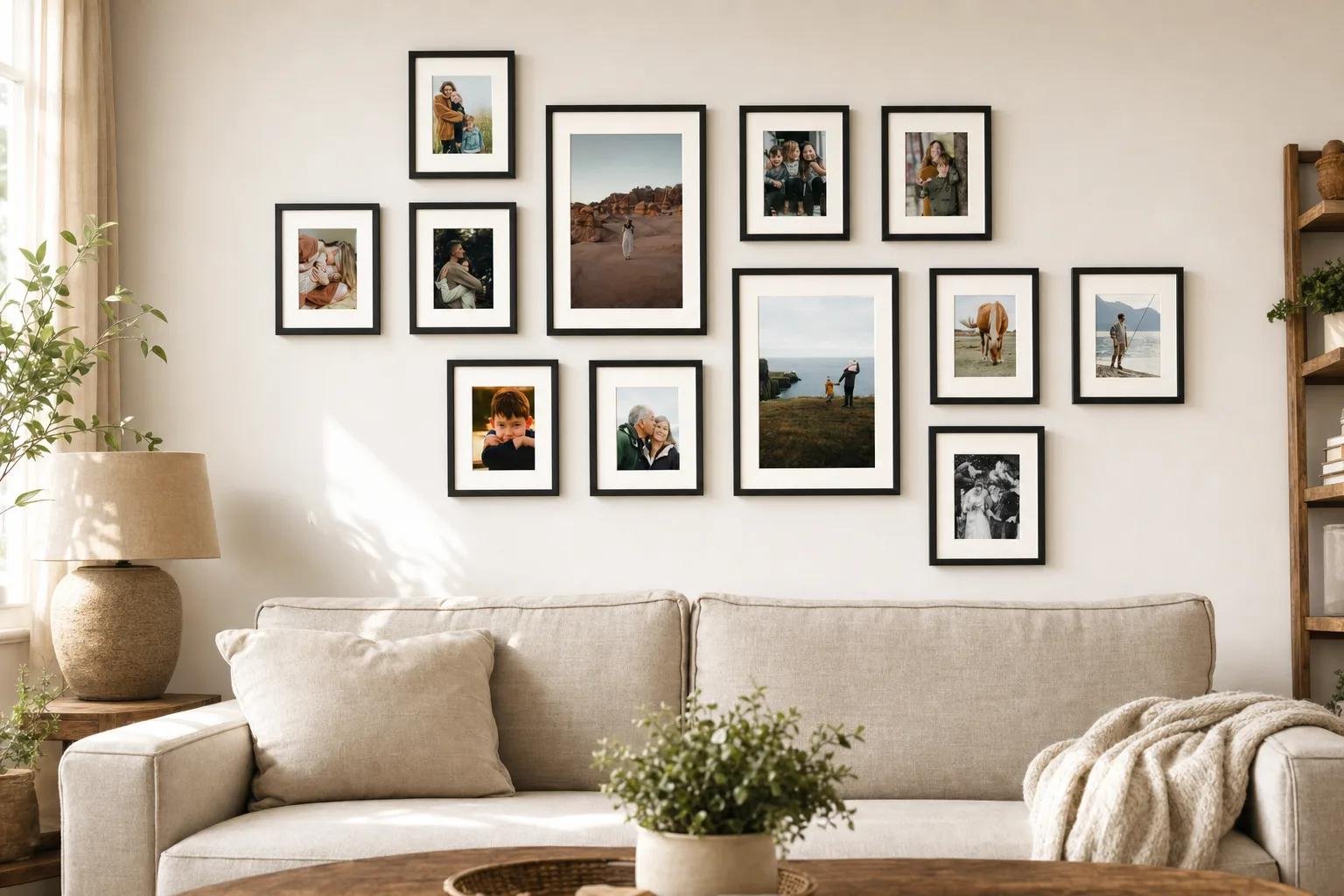
The most basic method you could use to add personality to your living room is to create a gallery wall. It may include family pictures, printable art, drawings, post cards, or images that were gathered throughout the years.
Matching frames are not essential and do not need to be expensive. Purchase inexpensive frames from local merchants or make the most of existing frames or repaint older frames for an elegant look.
If you want to create a balanced design, select a few related colors or themes. For instance, black and white family portraits can be a beautiful complement to abstract botanical artwork.
When hanging, lay out the frames on the floor first. Determine the size of the wall and try to space the items until the design is balanced. Paper templates, which can be cut to the size of your frames, can also be temporarily attached to the wall.
Budget tip: Make your own pictures or use pictures from art. This will cost less than ready-made fancy prints.
2. Create an accent wall with Paint
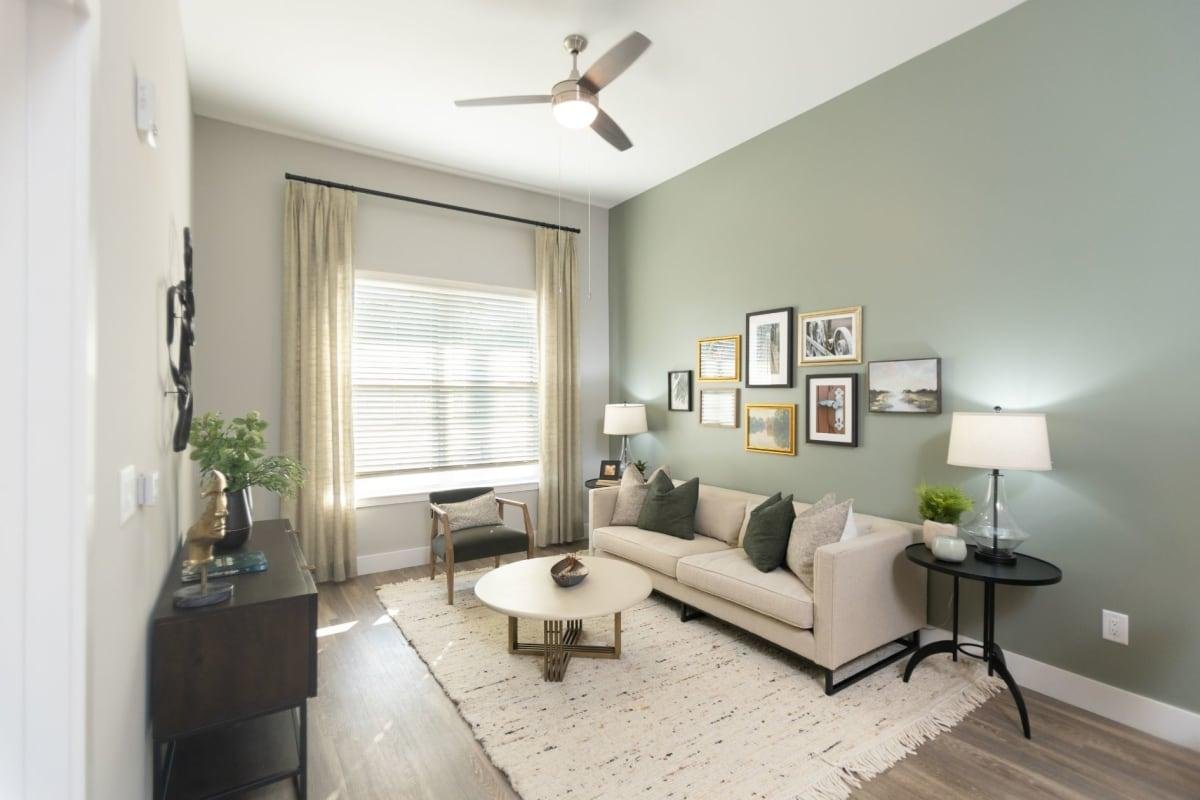
One of the most inexpensive methods to transform the look of a living room is to use paint. If you want to update the whole area, then consider one accent wall!
Select a color which matches your current colors in the furniture and flooring. Muted blue, soft green, warm beige and terracotta are colours that will add character to the room without taking over the show.
A simple geometric design can be made using painter’s tape as well. Vertical lines, large areas of color or a painted arch behind a console table could also lend a touch of beauty, without the cost of wall coverings.
Surface preparation and application of paint appropriate for wall materials. Before you begin work, protect any nearby furniture and flooring.
Practical example: Walls of cream in the living room and a neutral sofa can be complemented by a neutral green accent wall behind the sofa to add coloration without overwhelming the rest of the room.
Shine a small sample of the paint first as light conditions can vary during the day.
3. Decorate With Printable Artwork
Printable artwork can be used to decorate a wall in an affordable way. Digital prints are available for cheap or you can make your own designs from photographs, diagrams and even typography.
Select painting that matches your room’s colors. Abstract forms, botanical prints, landscapes, and minimalist prints can harmonize with a wealth of different decorating styles.
Print desired designs on appropriate size paper and frame them in simple frames. To achieve a harmonious look, try to use the same frame finishes or introduce a couple of colours throughout the range.
Before downloading or reproducing, review printing requirements and usage permissions of the artwork.
Instead of having a lot of small pictures, try using one large print above a sofa, or console table. Good proportions help keep the room neat.
4. Place Affordable Floating Shelves.
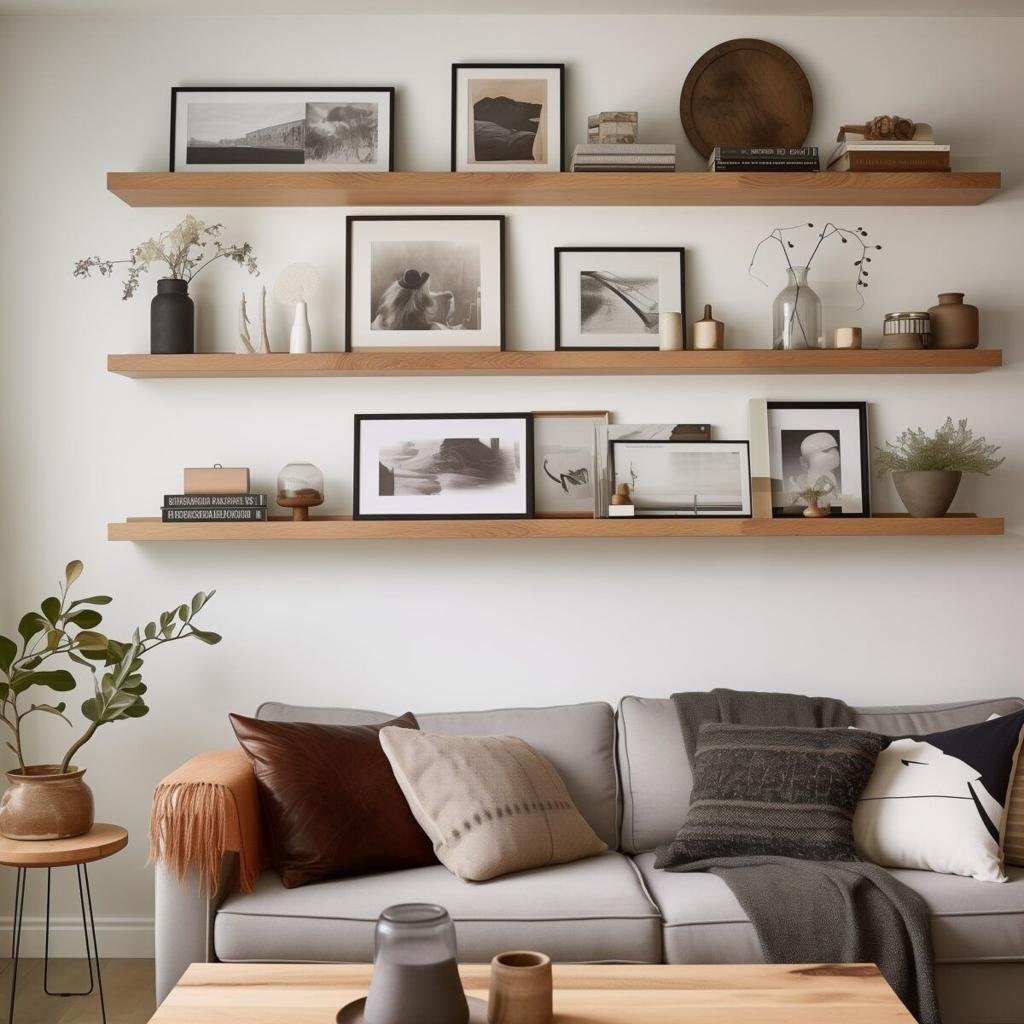
Floating shelves blend decoration and storage in one. They are great for hanging books, photos, small plants, ceramics and other items that might otherwise be occupying floor space.
Select shelves to fit your wall, and the articles you want to hang. Simple wooden shelves can be used for natural interiors and painted shelves can be integrated into the wall or offer a contrast.
Maintain balance in the composition. Use a couple of books, along with a small decorative item or two, and allow for some “breath room” so the display is not over-whelmed.
Inspect for any concealed wiring or pipes as appropriate prior to installation. Ensure the correct type of brackets or fixings are used on the wall material and use the manufacturer’s recommended weight limits.
Money-saving tip: If the existing shelving is suitable, you can simply refresh the existing shelves, which might be more budget-friendly than buying new ones.
5. Try to use Mirrors as decorative wall features.
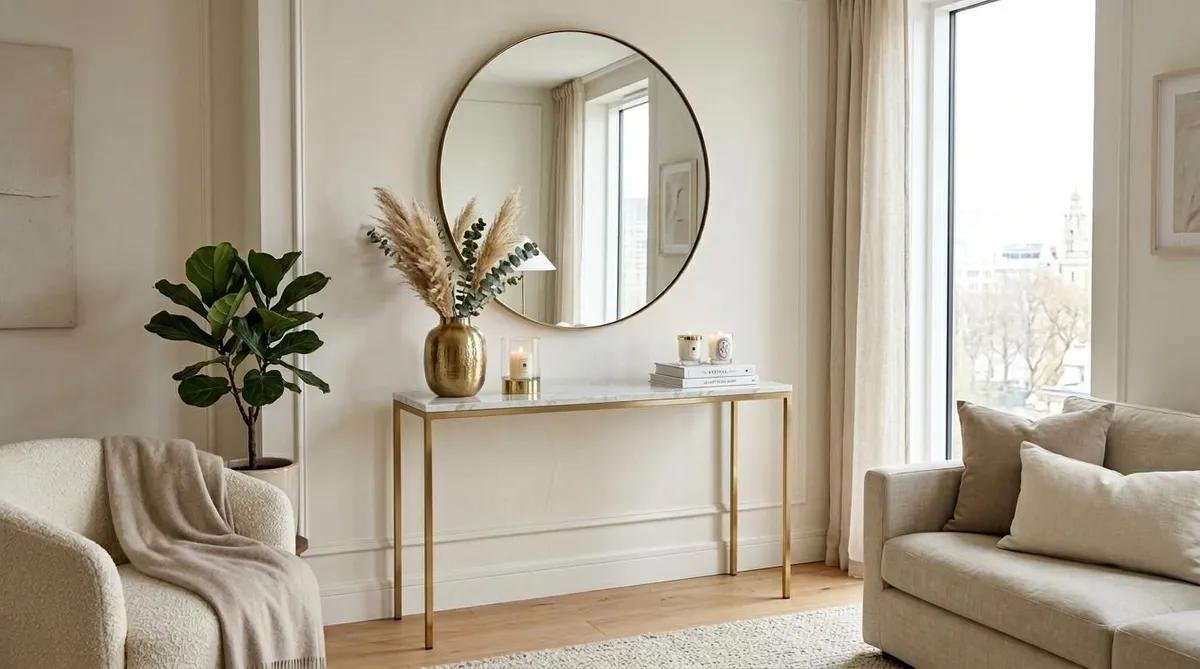
A living room can be made brighter by reflecting the light available in the space with the use of mirrors. They also serve as a decorative centerpiece that doesn’t necessarily need to be a complex design.
A large mirror on a console table can help to create a balanced look, while a smaller round mirror could fit into an empty corner or narrow wall.
Select a frame that matches the overall theme of your room. Whether it’s a natural finish or a simple metal frame, they can work well in wood or contemporary interiors.
Placement matters. A mirror that reflects a window or other interesting sight is more useful than a mirror that reflects clutter.
There is no need to use a costly designer mirror. A mirror with a frame that is simple, yet large enough, can be a very attractive accessory when displayed properly.
Use appropriate mounting hardware for the weight of the mirror and type of wall.
6. Display Family Photos and Personal Memories
A living room can have a welcoming and unique vibe with a personal photo. They are also a good way to adorn the walls with something other than generic designs.
Choose images from family events, holidays, celebrations, or events of significance. They can be displayed in a neat grid, horizontally in a row or more loosely in a gallery wall.
Use frames with similar colours for a cohesive look. For a more eclectic look, mix different frame types and maintain the balance.
Post cards, drawings by children, or a small print with sentimental value can also be displayed.
If you’re hanging photos in the living room that are visible from the outside of the house or are often used as a common space for visitors, think about privacy.
The idea is to have a display which represents your life, but does not consume all the wall space.
7. Consider using Removable Wallpaper or Wall Decals.
Patterns and color can be added to walls without permanently mounting wallpaper or wall decals. These can be particularly advantageous to renters as long as the product is approved by the landlord and will fit the wall surface.
Opt for a delicate botanical print or geometric design, or a patterned visual design of a texture that goes well with your furniture.
Choose an area to cover, as opposed to covering the whole room, or make a background behind a console table, or an area that is used as a small decorative detail.
Test in an inconspicuous area and follow manufacturer recommended instructions for installation and removal. Delicate paint or wall paper may be damaged by some adhesives.
Calculate the price of material, quantity required and preparation before buying.
8. Create your own wall art!
With DIY wall art, you can decorate your home according to your personal taste without having to bear the cost of hiring a professional.
You might simply draw some basic abstract designs on appropriate paper or draw a botanical drawing, set a piece of patterned fabric into a frame or place pressed flowers in a display frame.
There’s no need for professional artistic talent. Some simple colors can be repeated and simple shapes can produce a cohesive design.
For instance, create three little abstract prints in cream, dark green and terracotta colours to fit above a sofa.
Use appropriate material and prevent the artwork from excessive exposure to sunlight or moisture.
For the crafty person, do-it-yourself art projects are a great way to spend a weekend. It will be personal, less expensive and different from mass produced decorations.
9. Decorate walls using plants.
Natural color and texture can be added to a living room with plants. With available light and space, you can choose appropriate trailing plants for shelf or wall-mounted planters for indoor use.
Based on room conditions, not appearance to choose plants. There are some varieties that need plenty of indirect light and some that will do better in lower light.
Secure mounting systems and containers that will not be affected by water damage. Do not use planters above seating areas unless the positioning system is appropriate and firmly anchored; and do not use planters with water in them above seating areas.
For a less labor intensive decorative, try framed botanical prints or realistic artificial plants.
Pet owners should consult with their veterinarian or the ASPCA to determine if the plant is poisonous before bringing it into the house.
10. Make a Decorative Wall (Fabric/Textiles)
A wall in the living room area can be colored, patterned and soft with textiles. You can use a decorative fabric panel, or a wall hanging that is the right size or a woven textile as an alternative to framed artwork.
Select an idea to match the color palette of the room. Neutral patterned fabrics can add some element of interest to a neutral interior, and patterned fabrics can be woven in a variety of ways to create different textures and patterns.
If a scarf, fabric remnant or existing textile is in good condition and suitable for display, then you may reuse it.
Ensure that the hanging method is appropriate and safe for the weight of the item. Stay away from open fires and heat sources when using textiles.
This is a great concept to use if you’re looking to incorporate some warmth without buying extra furniture or big decorative items.
11. When decorating, avoid having too many small decorations and instead opt for a large statement piece.
The least decorated room may be the least expensive room, though.
One large thing, either a framed print or a wall hanging, will have a greater impact than a jumble of unrelated small items.
Think about the height of the wall, and the furniture underneath. Too small and it may seem disconnected, too big and it can overpower a small room.
Consider hanging a large photo or painting on the main wall of the living room if you have one, before buying something else.
One budget tip is to concentrate the proportion and placement instead of the cost of the decoration. It takes smart fashion to make an affordable item seem like a purposeful buy.
12. Make sure to refresh existing decorations before purchasing additional ones.
There’s a very good chance that you already have the tools and the materials to upgrade your living room walls. Check around the house for frames, prints, mirrors, shelves and decorative items that might be used in another way to fit your home decorating needs.
Repaint an old frame, replace a faded print, clean a mirror or move artwork to another room. Simple modifications can transform a familiar object into a new look.
Take away any objects that may be out of place or in conflict with each other. Keep some open space in the wall to keep your favourite pieces visible.
If you will have to purchase materials, create a list of materials and cap the funds that you use for the purchase. Shop around and look at the project priorities – what is the problem you are trying to address?
The effectiveness of a wall makeover isn’t based on the cost. It will be judged on how it fits into your home and by your style.
Frequently Asked Questions
What are some easy ways to decorate cheaply at a living room?
See if you can do some of these projects, like DIY artwork, a cheap frame, family pictures, floating shelves, mirror or a painted accent wall. Restaging and moving existing decorations can also rejuvenate the room without extra costs.
Which is the best way to decorate a blank wall the cheapest?
Simple DIY art, personal photos or existing artwork can be relatively inexpensive choices. This will vary according to the number of prints, the type of frame, paint and any mounting that will be needed.
What ways can I make my living room walls seem costly when I don’t have a lot of money?
Use colours which are coordinated, artwork to the right size, carefully placed frames and not too many pictures on one wall. Good finishes and careful design can be more important than high-priced materials.
Is gallery wall still a right choice for modern living rooms?
Yes. With careful planning of art, frame finishes and the spacing, gallery walls can work in modern interiors. Using a muted color scheme can make parts of a design cohesive.
What are some ways that renters can decorate their living room without damaging the walls?
Use removable hooks, lightweight picture hanging strips or suitable removable decals depending on your rental agreement and wall surface. Refer to the product label and use with caution.
What can I put above my sofa in the living room?
This could be a large framed print, a coordinated gallery wall, a matching mirror or an attractive textile. Select appropriate dimensions and positioning for the sofa that won’t make the space look cluttered.
Conclusion
There’s no need for a big budget to decorate beautiful living room walls. You can decorate a plain wall with affordable art, carefully selected paint colors, personal photos, mirrors, floating shelves, and other do-it-yourself projects that will make the wall a home feature.
Best cheap decorating ideas for living room walls start with the items you already have out and focus on your needs, space and personal taste.
Begin at one wall and pick an idea that will fit your budget. Before installing anything, arrange a plan, use appropriate materials, and have ample open space for balance. Your living room can be more personal and attractive without spending too much money, with a little creativity.
