

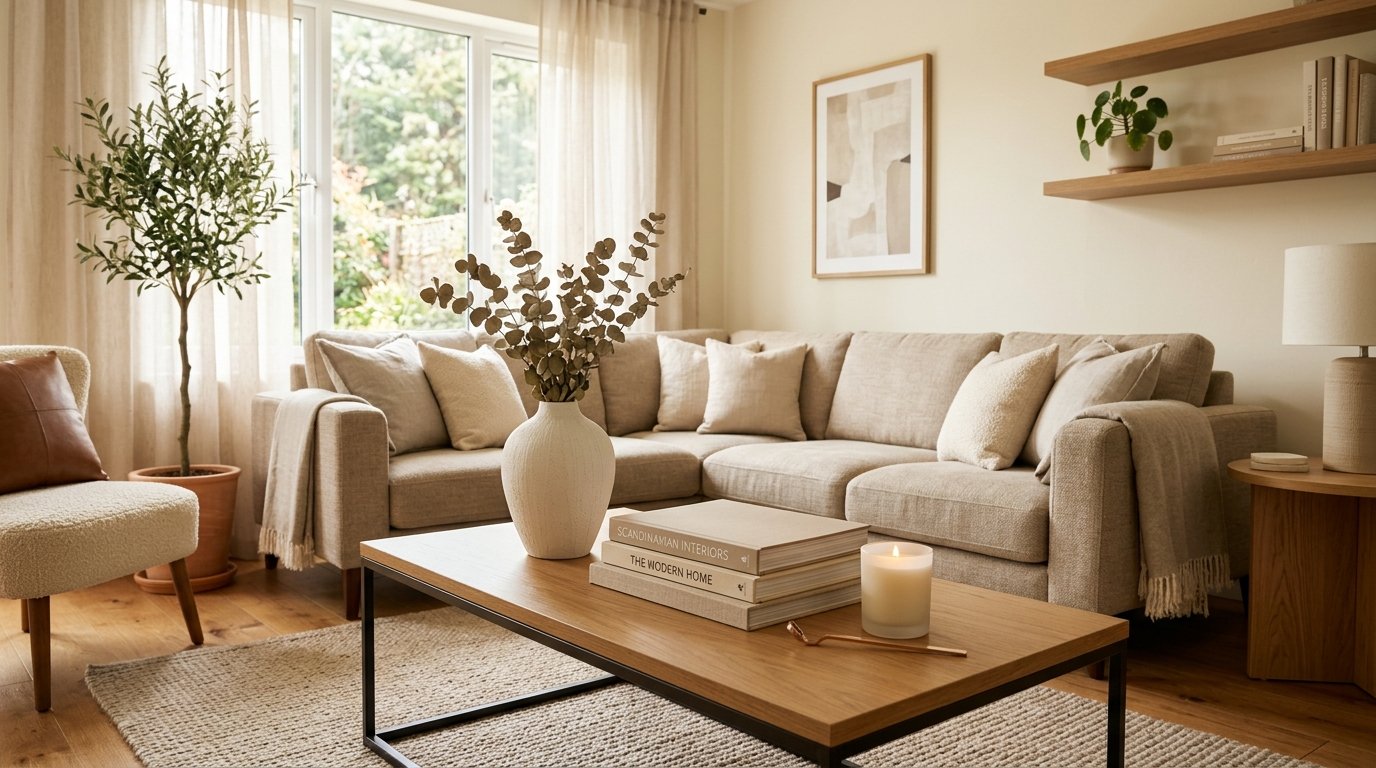
Decorating a home is not just about choosing beautiful furniture or expensive accessories. The way you arrange decorative objects can make a room feel balanced, welcoming, and visually interesting. If your shelves, coffee table, or mantel look cluttered or unfinished, a simple decorating technique may help you create a more polished appearance.
The 3-5-7 rule in decorating is a styling guideline that involves arranging decorative items in groups of three, five, or seven. These odd-numbered groupings can create a more natural and visually appealing arrangement than placing objects in perfectly matched pairs. Although this rule is not a strict design requirement, it can help beginners decorate with greater confidence.
1. Understanding the 3-5-7 Rule in Decorating
The 3-5-7 rule is based on the idea that odd-numbered groups often look more relaxed and interesting than symmetrical arrangements. Instead of placing two identical objects side by side, you might combine three items of different heights, textures, or shapes.
For example, you could style a coffee table with three objects: a small vase, a decorative book, and a candle. Each item serves a different purpose, but together they create a coordinated display.
Larger surfaces may accommodate five or seven carefully selected accessories. However, the number of items should always suit the available space. Seven objects on a small table may look crowded, while three items on a large console may feel too sparse.
The goal is not to fill every surface. It is to create an arrangement that feels intentional and balanced.
2. How to Apply the Rule to Different Areas
You can use odd-numbered groupings throughout your home, from living room shelves to bedroom nightstands.
On a coffee table, combine a decorative tray, a small plant, and a stack of books. On open shelving, arrange a vase, a framed photograph, and a small sculpture. In a bedroom, three coordinated accessories can add personality without making the nightstand feel crowded.
For larger console tables or mantels, consider using five objects with different heights and textures. A combination might include framed artwork, a pair of candlesticks, a small plant, and a decorative bowl.
When styling a shelf, remember to leave some empty space around the objects. Negative space helps each piece stand out and prevents the arrangement from appearing messy.
3. Mix Heights, Textures, and Shapes
Simply placing three, five, or seven objects together does not guarantee an attractive display. The way the objects relate to one another matters just as much as their number.
Try combining different heights. For example, place a tall vase beside a medium-sized decorative object and a shorter bowl. This variation creates movement and makes the arrangement more interesting.
Texture also adds depth. Ceramic, glass, wood, metal, and natural materials can work well together when their colors and styles complement one another.
You can also repeat a color across several items to create a sense of unity. A neutral vase, a beige book cover, and a natural wooden accessory may look coordinated even when their shapes differ.
Choose items that suit your home’s existing style rather than purchasing new decorations simply to complete a group.
4. Common Decorating Mistakes to Avoid
One common mistake is following the rule too literally. The 3-5-7 rule is a helpful starting point, but it should never override the practical needs of a room.
Avoid overcrowding shelves and tabletops just to reach a particular number. If three accessories look balanced, there is no need to add two more. Similarly, a symmetrical arrangement can be beautiful in a traditional or formal interior.
Another mistake is selecting objects that are identical in size and shape. Although matching accessories can create a coordinated look, too much repetition may make a display feel flat. Introducing differences in height, material, or form can help create visual interest.
Finally, consider scale. Small decorations may disappear on a large console, while oversized accessories can overwhelm a narrow shelf. Choose objects that fit the furniture and the surrounding space.
5. Simple Ways to Try the Rule on a Budget
You do not need expensive home accessories to experiment with the 3-5-7 rule. Start by shopping your own home for items that can be rearranged.
Books, plants, bowls, framed photographs, small lamps, and decorative objects can all be used to create attractive groupings. Try moving accessories between rooms before deciding whether you need anything new.
For a budget-friendly coffee table display, use a book you already own, a small plant, and a simple bowl. For a console table, combine a framed photograph, a vase, and a decorative object.
Take a step back and view the arrangement from across the room. Remove anything that feels unnecessary, and adjust the spacing until the display looks balanced.
Remember that successful decorating is about creating a home that reflects your personality. The 3-5-7 rule is simply one technique to help you achieve that result.
Conclusion
The 3-5-7 rule in decorating is an easy styling guideline that encourages you to arrange accessories in groups of three, five, or seven. By combining different heights, shapes, colors, and textures, you can create displays that feel more natural and visually appealing.
Start with a small surface, use items you already own, and experiment with different arrangements. Most importantly, treat the rule as a flexible guide rather than a strict requirement. The best home decor is balanced, functional, and personal to you.
